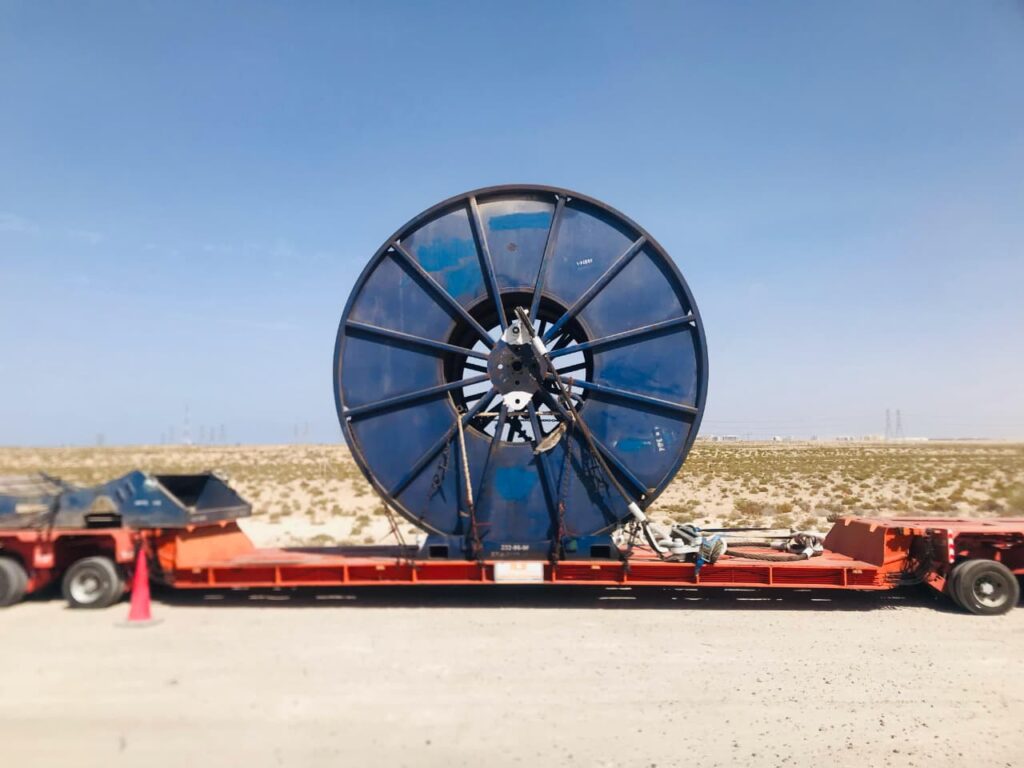
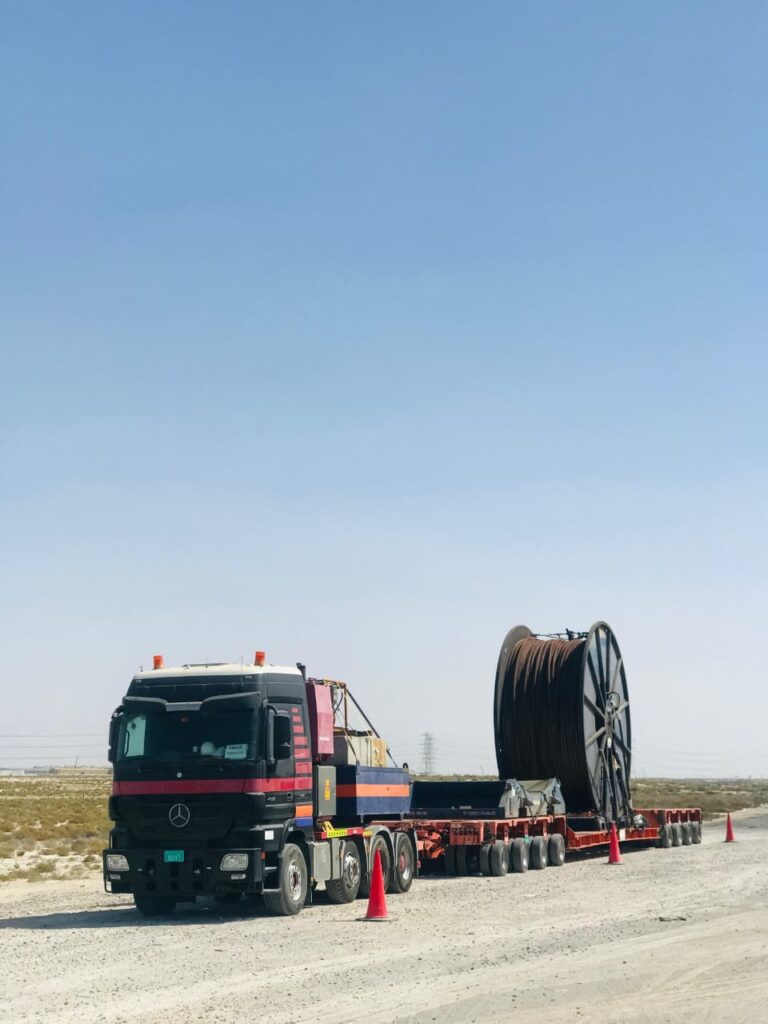
This case study examines the exact logistical engineering required to relocate a colossal 90-Metric Ton Steel Coil Drum loaded with industrial cable. Moving this 6-meter-diameter Over-Dimensional Cargo (ODC) from Abu Dhabi directly to Dubai Petroleum inside the Jebel Ali Free Zone (Jafza) demanded flawless inter-emirate coordination. TLS successfully executed this 118-kilometer transport by navigating adverse weather, mitigating cylindrical load risks, and safely clearing severe overhead infrastructure.
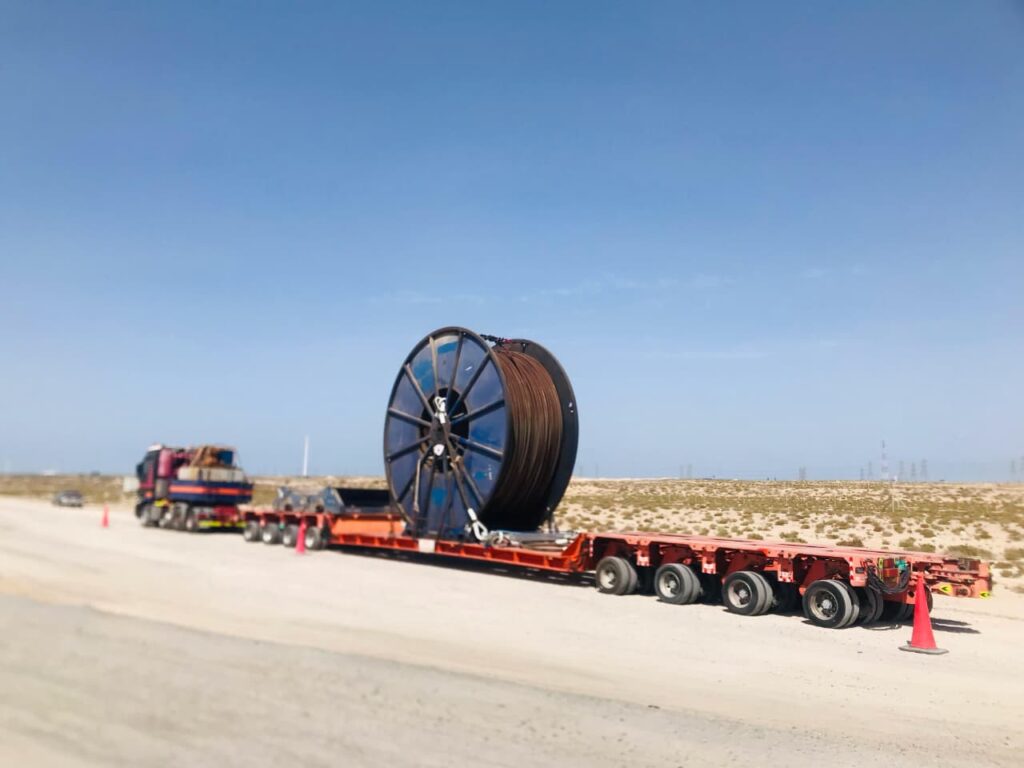
Why does transporting a 6-meter Steel Coil Drum require specialized logistics?
Moving heavy, cylindrical freight introduces distinct challenges, primarily concerning load stability and the Center of Gravity (CoG). Unlike standard flat-bottomed assets, a massive drum is highly prone to rolling without engineered stabilization. Furthermore, the 6,000 mm (6-meter) diameter creates an extreme vertical footprint, instantly ruling out conventional highway routes due to low-clearance bridges and overhanging power networks.
| Asset Classification | Destination Sector | Total Gross Weight | Drum Diameter |
| Steel Coil Drum (w/ Cable) | Oil & Gas (Dubai Petroleum) | 90 Metric Tons | 6,000 mm (6.0 m) |
Exact Project Specifications:
- Cargo Diameter: 6,000 mm (6.0 meters)
- Cargo Mass: 90,000 kg (90 Metric Tons)
- Transit Distance: ~118 Kilometers (Abu Dhabi to Jafza)
- Route Obstacles: 4 Major High-Voltage Lines & Restrictive Bridges
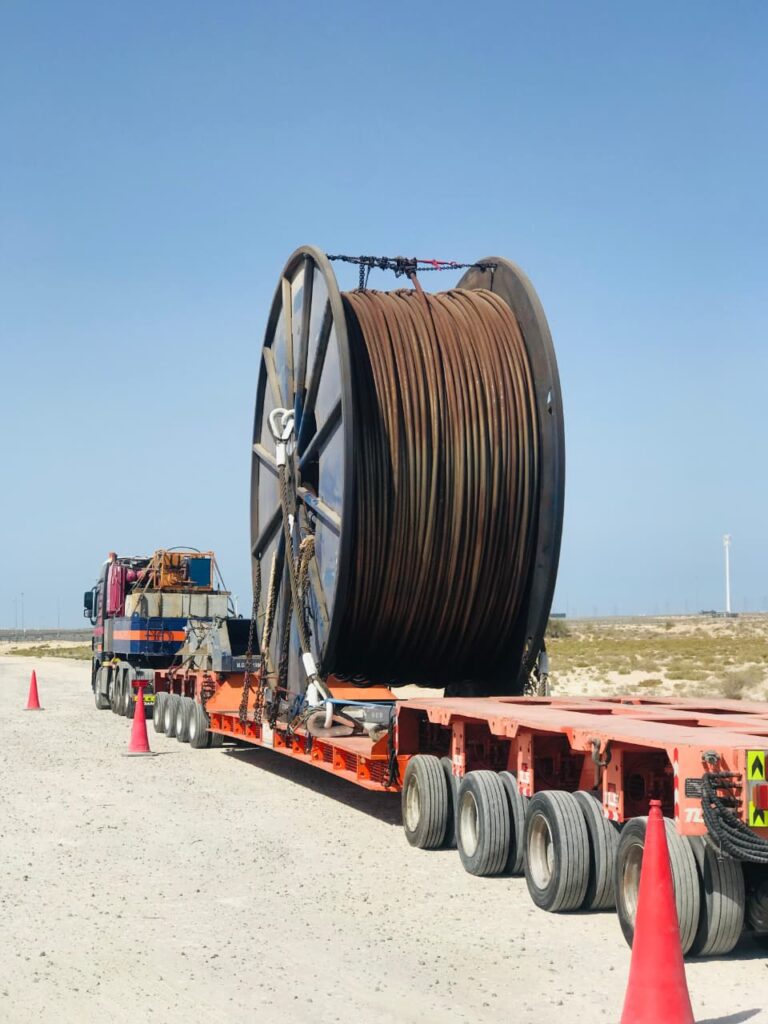
What heavy-lift equipment safely navigated the high-voltage power lines?
Standard flatbeds or low-bed trailers were completely inadequate for a 90-ton load standing 6 meters tall. The immediate, high-risk threat was striking critical overhead electrical infrastructure.
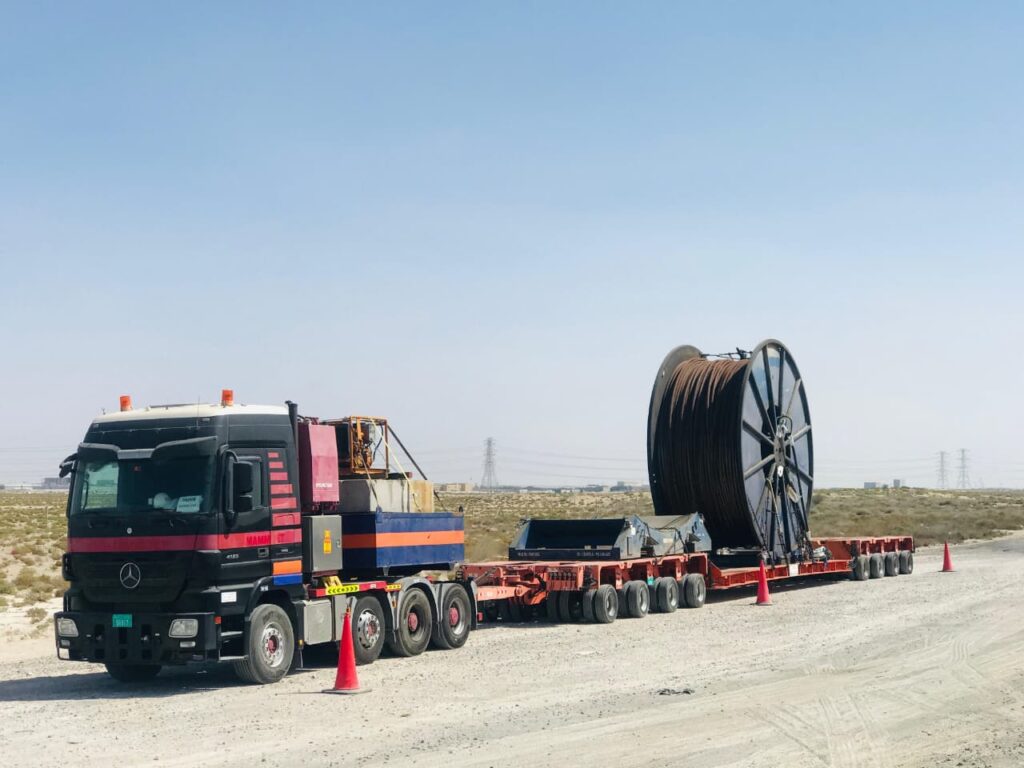
TLS deployed an advanced Drop Deck Hydraulic Trailer.
This specialized equipment features an ultra-low riding deck, which was the decisive factor in safely passing beneath the four major high-voltage transmission lines and low-clearance bridges identified during our preliminary route survey.
Core operational solutions provided by TLS:
- Custom Cradle Stabilization: Prior to loading, the 90-ton drum was hoisted and locked into a purpose-built structural cradle. This neutralized the rolling hazard, keeping the cylinder perfectly static across the entire 118 km journey.
- Vertical Profile Reduction: By leveraging the drop deck hydraulic axles, TLS drastically lowered the overall running height of the convoy, ensuring zero contact with critical overhead utilities.
- Adverse Weather Navigation: The transport window coincided with rain, heavy fog, and muddy terrain. TLS operators utilized the trailer’s hydraulic suspension to maximize traction and maintain absolute load stability over slick, unpaved zones near the delivery site.
Why is heavy project cargo frequently transported to Jafza?
The Jebel Ali Free Zone (Jafza) operates as the primary industrial and logistics artery of the Middle East. Hosting major energy conglomerates like Dubai Petroleum, the zone requires a constant influx of heavy machinery, industrial turbines, and massive cable drums. However, moving ODC from Abu Dhabi into Jafza requires crossing emirate borders, which triggers strict highway regulations and complex permitting processes.
Drivers of UAE Energy Logistics:
- Power Grid Expansion: The continuous upgrading of the UAE’s infrastructure demands the frequent relocation of massive transformers and cable drums.
- Oil & Gas Continuity: Energy operators rely on the just-in-time delivery of colossal, critical assets to sustain both onshore and offshore production schedules.
- Inter-Emirate Corridors: The heavy-lift transit route between Abu Dhabi and Dubai is highly active, requiring elite traffic management to move mega-cargo without disrupting daily civilian commuter flow.
How did TLS overcome the core logistical obstacles?
Flawless execution of this complex move depended entirely on our capacity to adapt to environmental hazards and absolute vertical clearance limitations.
| Logistical Challenge | Project Constraint | TLS Execution Strategy |
| Vertical Clearance | 4 High-Voltage Transmission Lines | Deployed Drop Deck Hydraulic Trailers to minimize total transport height. |
| Cargo Stability | Cylindrical rolling hazard (90 MT) | Engineered a custom steel cradle to lock the heavy load securely in place. |
| Environmental Hazards | Heavy rain, mud, and low visibility | Utilized active hydraulic leveling and expert manual steering to prevent sliding. |
| Inter-Emirate Transit | 118 km cross-border route | Managed seamless permit coordination between Abu Dhabi and Dubai authorities. |
This flawless delivery to Dubai Petroleum underscores the capacity of TLS to manage high-stakes energy logistics under intense environmental and infrastructural pressure. Backed by over two decades of heavy-lift and project logistics expertise, TLS guarantees the safe, compliant delivery of complex cargo regardless of extreme weight, irregular shapes, or adverse weather conditions.
Frequently Asked Questions on ODC Logistics
Q: Why use a Drop Deck Hydraulic Trailer for massive coil drums?
A drop deck configuration rests significantly closer to the asphalt compared to a standard trailer. When moving a 6 meter tall drum, maximizing every millimeter of vertical clearance is vital. This trailer lowers the entire running height of the freight, permitting safe transit under bridges and power grids that would otherwise halt the operation.
Q: How is a 90-ton rolling cylinder secured for highway transport?
TLS utilizes custom-engineered “cradles.”
This structural steel base mirrors the drum’s exact curvature. By resting the coil inside this cradle, the rolling hazard is neutralized, transforming it into a stable, flat-based unit that can be rigidly lashed to the hydraulic trailer bed.
Q: What are the dangers of moving heavy-lift cargo in mud and rain?
Wet and muddy conditions severely reduce road traction, creating a high-risk environment for a 90-ton load to slide or cause the trailer to sink. TLS mitigates this through hydraulic trailers that actively adjust load balance, operated by specialists trained specifically in low-traction, adverse-weather maneuvering to ensure zero slips.