
This case study breaks down the highly technical heavy-lift engineering required to relocate a massive 90-Metric Ton Manitowoc Lattice Boom Crawler Crane. Because standard loading ramps are useless for a machine of this scale, the heavy-lift specialists at TLS executed an advanced hydraulic jacking operation. Paired with a specialized Goldhofer modular trailer, our team guaranteed absolute safety, precision, and efficiency during this critical construction equipment transport.
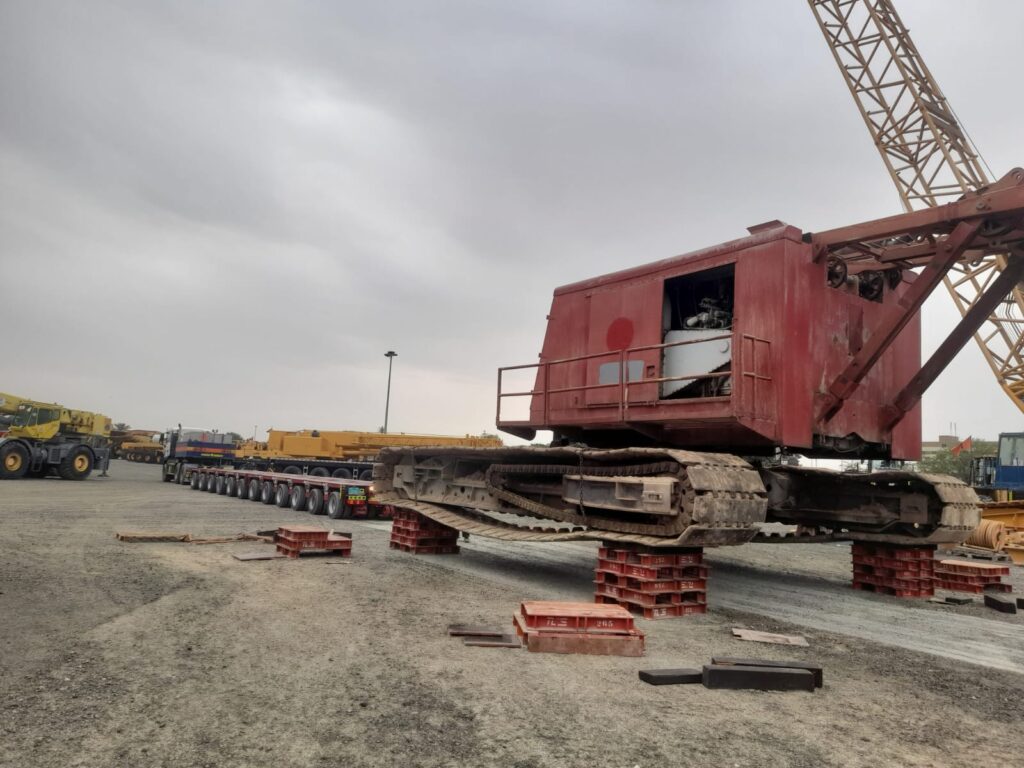
Why does relocating a 90-ton crawler crane demand specialized logistics?
Lattice boom crawler cranes, such as the Manitowoc MLC650 VPC-MAX, are the backbone of heavy construction, engineered to hoist colossal loads on major infrastructure sites.
However, the sheer physical footprint of these machines makes them incredibly difficult to move. With a track width spanning 5.50 meters, the crane drastically exceeds the dimensions of standard highway lanes and conventional loading ramps, necessitating alternative, highly engineered lifting techniques.
| Asset Classification | Sector Application | Total Gross Weight | Maximum Track Width |
| Lattice Boom Crawler Crane | Heavy Construction & Infrastructure | 90 Metric Tons | 5,500 mm (5.5 m) |
Exact Equipment Specifications:
- Overall Length: 12.00 meters (12,000 mm)
- Overall Width: 5.50 meters (5,500 mm)
- Overall Height: 4.00 meters (4,000 mm)
- Total Mass: 90 Metric Tons
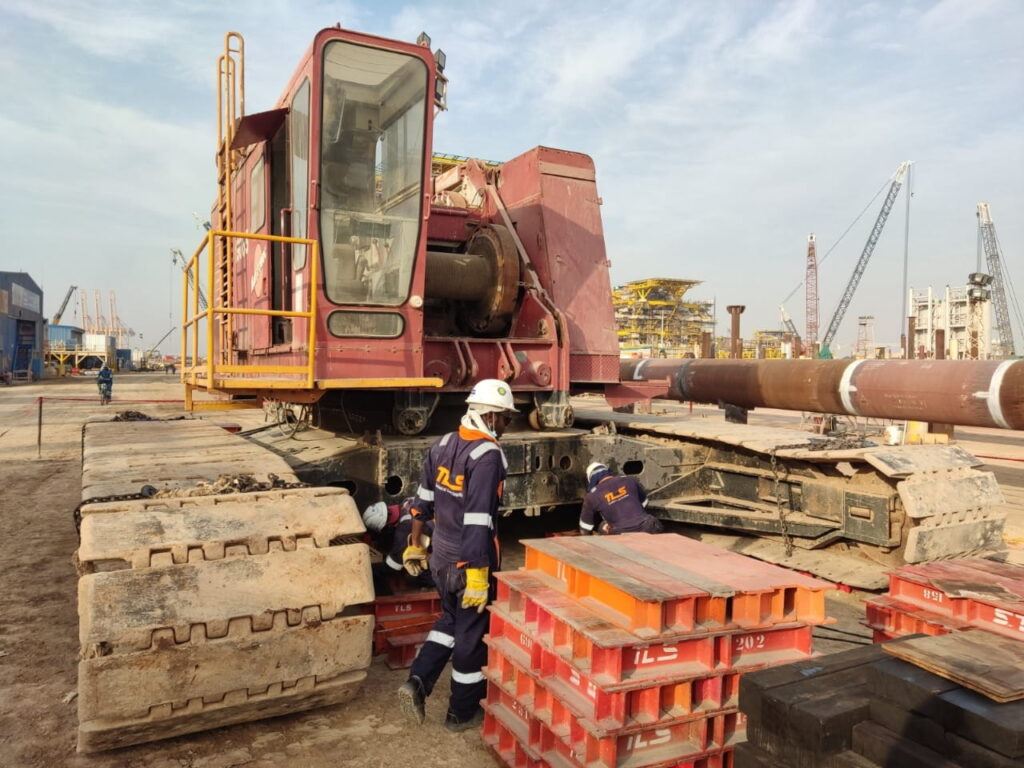
What heavy-lift equipment safely managed the 90 MT crane?
Attempting to drive a 90-ton, 5.5-meter-wide machine up a standard trailer ramp poses a catastrophic tipping hazard. To neutralize this risk, TLS deployed industrial-grade Hydraulic Jacks combined with a highly adaptable Goldhofer THP/SL modular trailer.
Core operational phases executed by TLS:
- Precision Hydraulic Jacking:
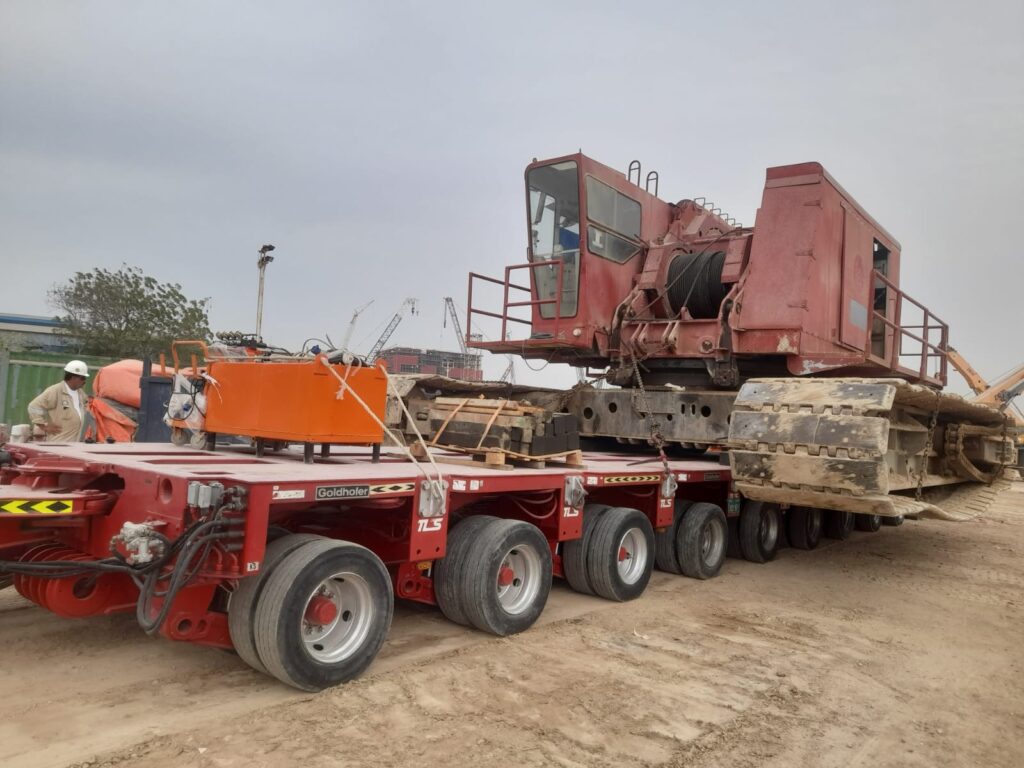
Our technical crew strategically positioned hydraulic jacks to elevate the 90-ton crane straight up to a precise clearance height of 1.2 meters. Once elevated, the colossal machine was carefully lowered onto heavy-duty, engineered steel support stools. - Modular Trailer Positioning: With the crane safely suspended and completely stabilized on the steel supports, TLS operators precisely reversed the Goldhofer hydraulic trailer directly underneath the 5.5-meter-wide load.
- Secure Loading and Offloading:
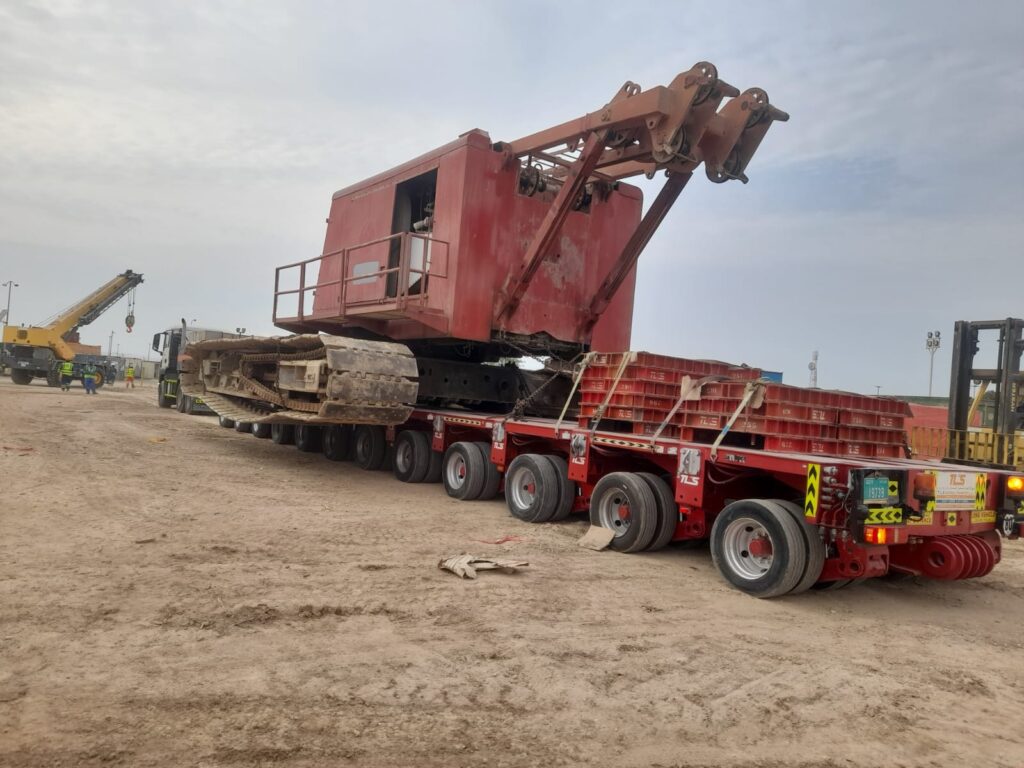
To transfer the weight, we utilized the trailer’s active hydraulic suspension to lift the deck upward until it met the crane’s undercarriage. The cargo was then rigidly lashed to the trailer deck for transit. Upon arriving at the destination, TLS reversed this exact hydraulic jacking procedure to ensure a flawless, safe offload.
Overcoming Complex Heavy-Lift Hurdles
In the heavy construction sector, equipment standby time is incredibly expensive. Success is measured by the logistics provider’s ability to plan meticulously and execute rapidly without compromising safety.
| Logistical Challenge | Project Constraint | TLS Execution Strategy |
| Loading Methodology | Standard ramps fail at 5.5m width | Engineered a flawless 1.2-meter vertical hydraulic jacking sequence. |
| Cargo Mass | 90-Ton concentrated weight | Deployed a Goldhofer THP/SL to actively distribute the immense load. |
| Equipment Safety | Severe tipping risk during loading | Anchored the suspended load on custom steel supports prior to trailer entry. |
| Turnaround Time | High financial cost of crane downtime | Streamlined the jacking and transit phases to relocate the asset rapidly. |
This seamless operation underscores the elite capabilities of TLS in managing the region’s most technically demanding heavy-lift projects. Leveraging over two decades of specialized project logistics experience, the TLS team consistently engineers safe, punctual, and innovative solutions for complex cargo, ensuring your high-value industrial assets are handled with absolute operational excellence.
Frequently Asked Questions on Crane Logistics
Q: Why are hydraulic jacks necessary for heavy-lift logistics?
Industrial hydraulic jacks utilize highly pressurized fluid to push extreme loads strictly vertically. In project logistics, TLS uses them to elevate massive, immovable assets like 90-ton cranes or power transformers just high enough to slide a specialized transport trailer underneath. This entirely eliminates the need to hire massive, expensive port cranes just to load a truck.
Q: What makes the Goldhofer THP/SL trailer ideal for heavy cranes?
This specific modular trailer is equipped with a grid of hydraulic axles designed to dissipate extreme weight like a 90-ton crane evenly across the asphalt, preventing road damage. Crucially, its hydraulic suspension allows the actual deck of the trailer to be raised and lowered on command, which was the exact feature required to “pick up” the crane off its steel resting supports.
Q: How does TLS guarantee safety when jacking up a 90-ton load?
Safety dictates every phase of the operation. TLS engineers perform rigorous geometric and pressure checks at every millimeter of the vertical lift. We utilize over-engineered, heavy-duty steel stools to lock the crane into a stable position once it reaches the target 1.2-meter height. This ensures the massive structure is mechanically prevented from falling while the transport trailer maneuvers beneath it.