
This case study demonstrates TLS’s elite heavy-lift capabilities in supporting vital energy infrastructure. Our logistics specialists successfully managed the complex receipt and delivery of four massive power transformers, transporting them from Jebel Ali Port directly to the Hassyan Power Plant. As a monumental 2.4GW gas-fired facility situated on the Arabian Gulf coast, this plant is central to regional energy security and a key pillar of the Clean Energy Strategy 2050.
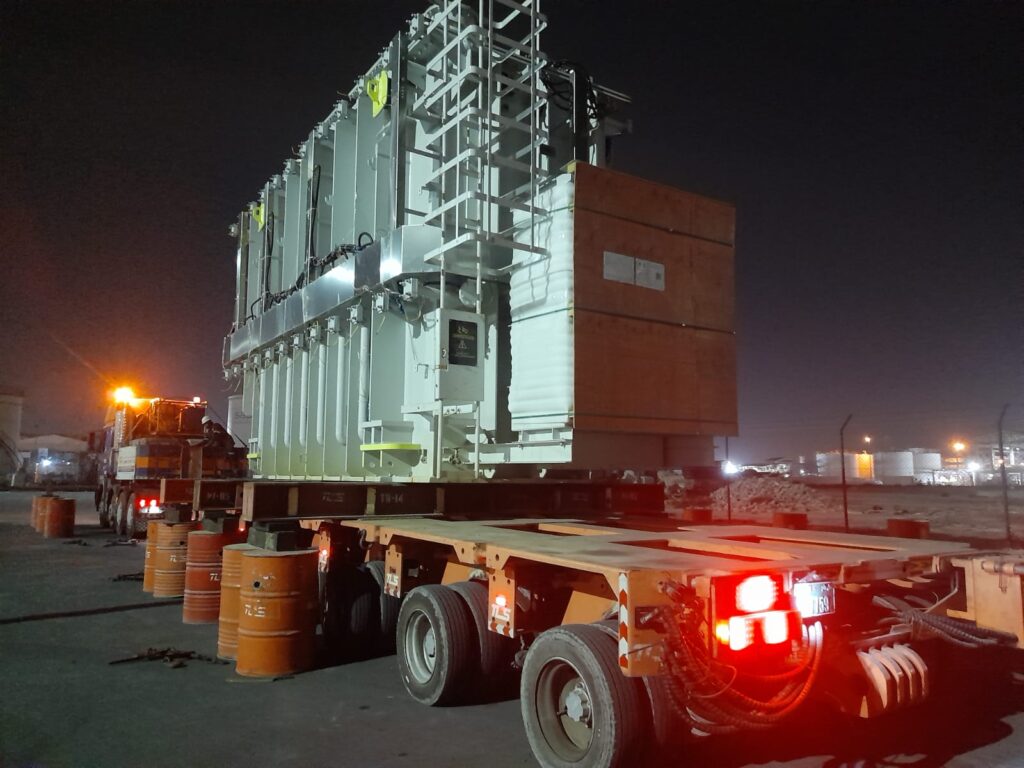
Why does relocating 85-ton power transformers require specialized logistics expertise?
Power transformers are the beating heart of large-scale energy generation.
Despite their rugged exterior, they house highly sensitive internal electrical components that can be easily compromised by excessive vibrations or improper handling. Each of these colossal units weighs a staggering 85 metric tons and stands 4.1 meters tall. Safely maneuvering four of these immense structures demands absolute precision to avert catastrophic damage during transit.
| Asset Classification | Sector Application | Unit Gross Weight | Maximum Height |
| Power Transformer | Energy Generation | 85 Metric Tons | 4,100 mm (4.1 m) |
Exact Project Specifications:
- Overall Length: 6.5 meters (6,500 mm)
- Overall Width: 3.2 meters (3,200 mm)
- Overall Height: 4.1 meters (4,100 mm)
- Total Volume: 4 Individual Units
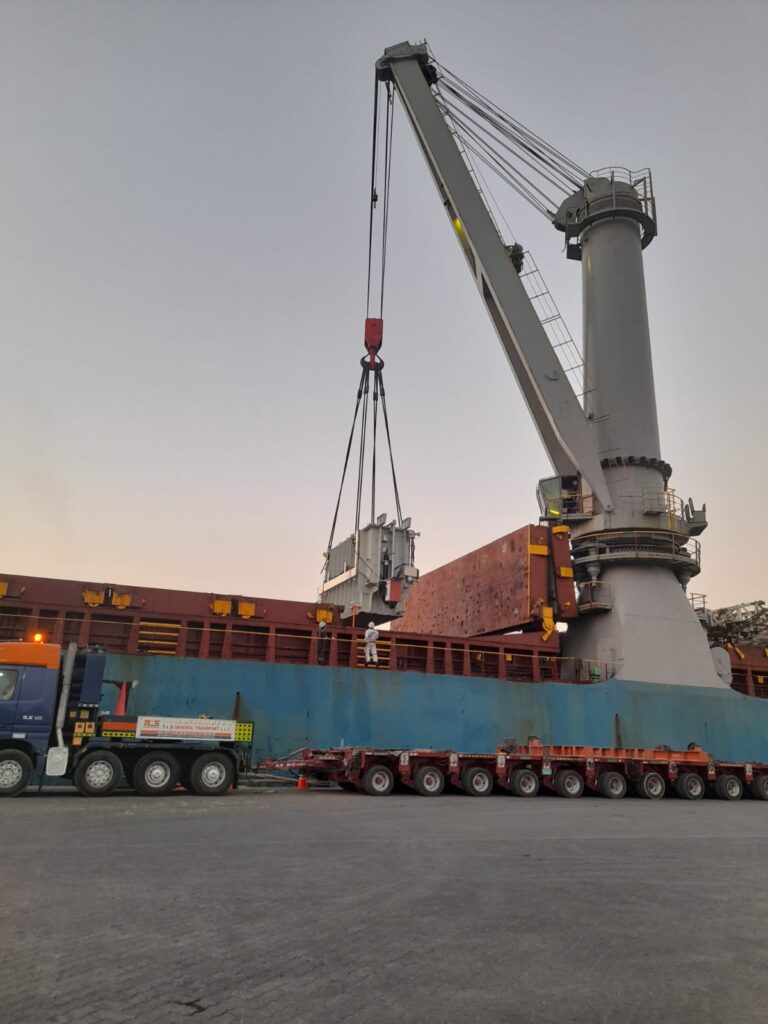
What heavy-lift transport methods were utilized for these critical energy assets?
Standard commercial flatbed trucks are structurally incapable of bearing an 85-ton concentrated load. To ensure maximum stability and protect the sensitive cargo, TLS deployed a fleet of specialized Hydraulic Multi-Axle Trailers to bridge the gap between the port terminal and the power facility.
Core operational solutions provided by TLS:
- Direct Vessel Receiving: To drastically reduce the risk of handling damage, TLS coordinated to receive the transformers directly from the ship’s cranes, bypassing intermediate port transfers.
- Secure Port Stooling: Upon receipt, we carefully rested the massive units on engineered heavy-duty steel supports (stooling) within a designated port storage zone until the Hassyan site was prepared for final installation.
- Precision Transit: Our veteran operators utilized hydraulic multi-axle trailers to meticulously balance the extreme weight across the road network, ensuring a perfectly level and secure ride.
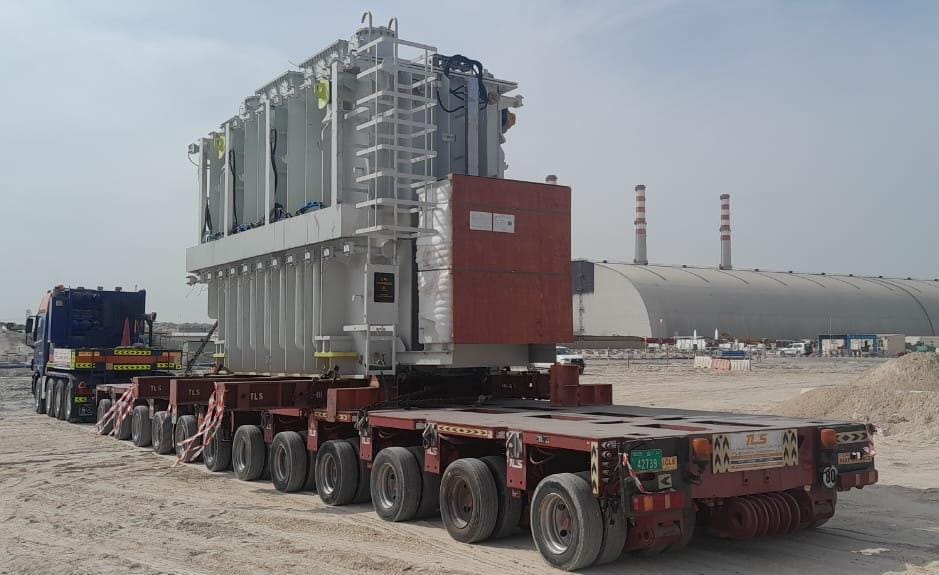
Measuring Success: Overcoming Heavy-Lift Complexities
The flawless execution of this critical energy delivery relied entirely on exact scheduling, robust port coordination, and master-level heavy-lift engineering.
| Logistical Challenge | Project Constraint | TLS Execution Strategy |
| Extreme Cargo Mass | Four concentrated 85-Ton loads | Deployed a fleet of hydraulic multi-axle trailers to actively disperse the weight. |
| Port Handling Risks | Vulnerability during multiple lifts | Orchestrated direct-from-vessel receiving and secure steel stooling at Jebel Ali. |
| Energy Infrastructure | High-stakes power plant components | Delivered all units safely to sustain the 2.4GW gas-fired facility’s timeline. |
TLS continues to set the benchmark for excellence in project logistics. By drawing on decades of specialized heavy-lift experience, we guarantee that the region’s most demanding cargo movements are executed flawlessly, ensuring critical energy components arrive safely and strictly on schedule.
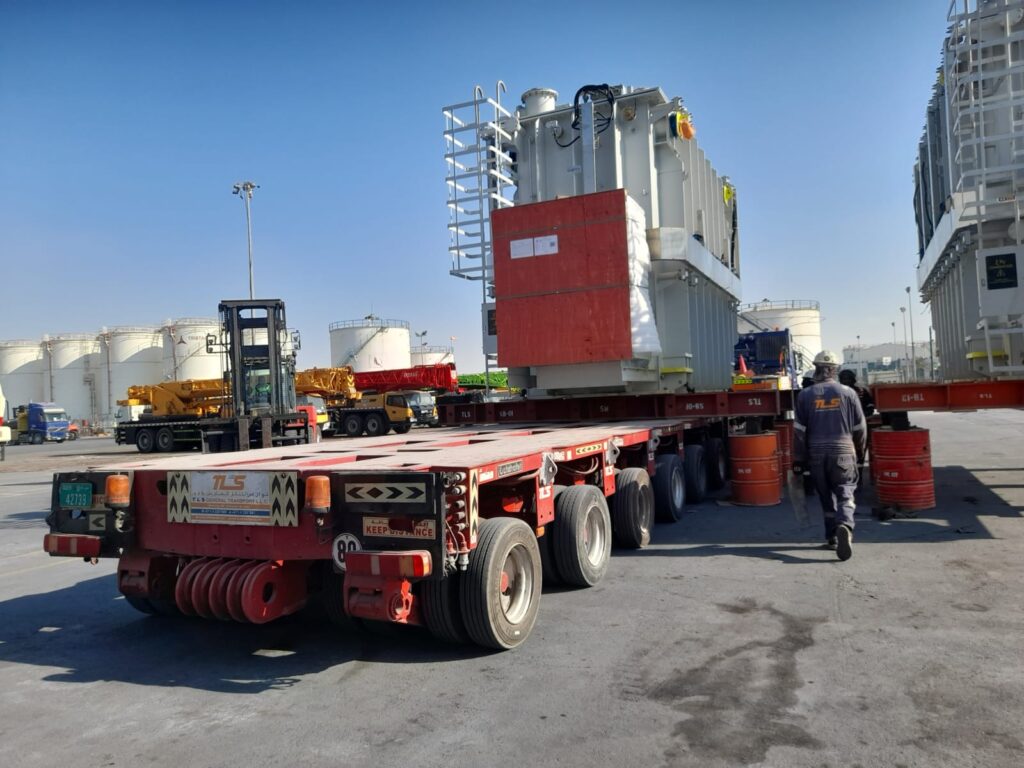
Frequently Asked Questions on Transformer Logistics
Q: What is “stooling” in heavy cargo port storage?
Stooling is a specialized storage technique used in project logistics.
Instead of leaving a massive object directly on the ground or tying up a trailer, the cargo is carefully lowered onto heavily engineered temporary supports, such as thick steel beams or reinforced wooden blocks. This keeps the asset elevated, secure, and easily accessible for a transport trailer to slide underneath when it is time to move.
Q: Why are hydraulic multi-axle trailers mandatory for moving transformers?
An 85-ton transformer exerts too much concentrated pressure for standard truck axles and tires to survive. A hydraulic multi-axle trailer utilizes dozens of wheels to dissipate that staggering weight evenly across the asphalt. Additionally, the hydraulic suspension actively compensates for uneven terrain, keeping the sensitive transformer perfectly flat and preventing internal damage.
Q: What are the logistical advantages of receiving cargo directly from a vessel?
“Direct receiving” means the cargo is lifted off the ship and placed straight onto the transport provider’s waiting equipment (or immediate stooling). This completely eliminates the need for port stevedores to move the item back and forth across the terminal multiple times. Fewer lifts mean a drastically reduced risk of accidental damage, accelerated delivery timelines, and lower overall handling costs for critical energy projects.