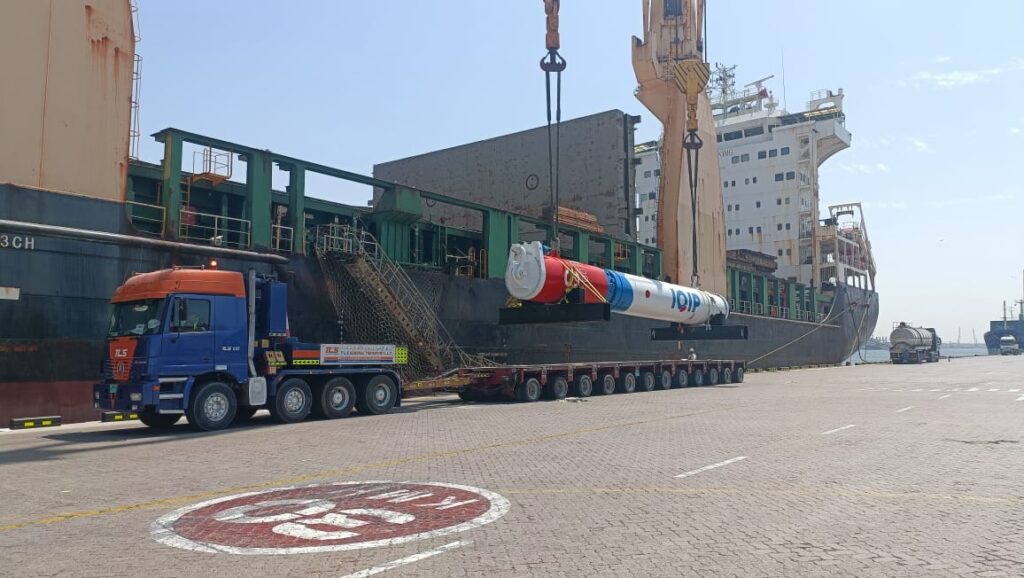
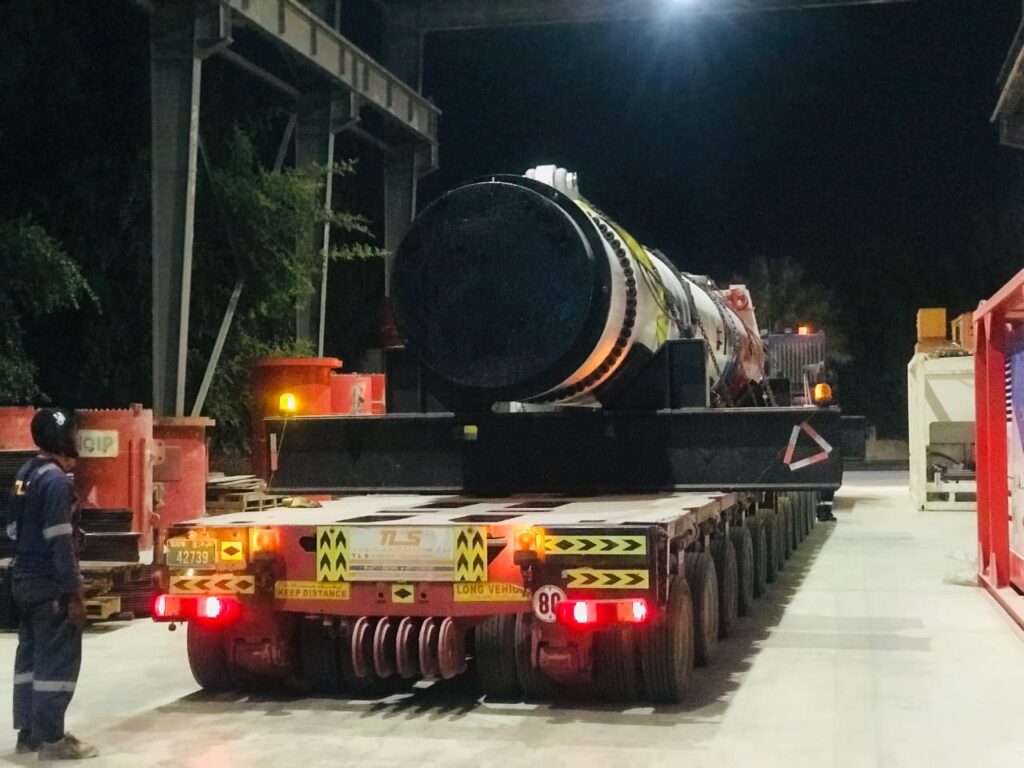
This case study breaks down the highly technical heavy-lift operation executed by TLS to move a 160-Metric Ton Hydro Hammer (model S1400). Transporting this ultra-dense, high-impact asset over a 60-kilometer route from Dubai Investment Park 2 (DIP 2) to Jebel Ali Port required multi-axle hydraulic transport, severe highway modifications, and flawless logistical choreography.
Why is transporting a 160-ton Hydro Hammer a critical engineering challenge?
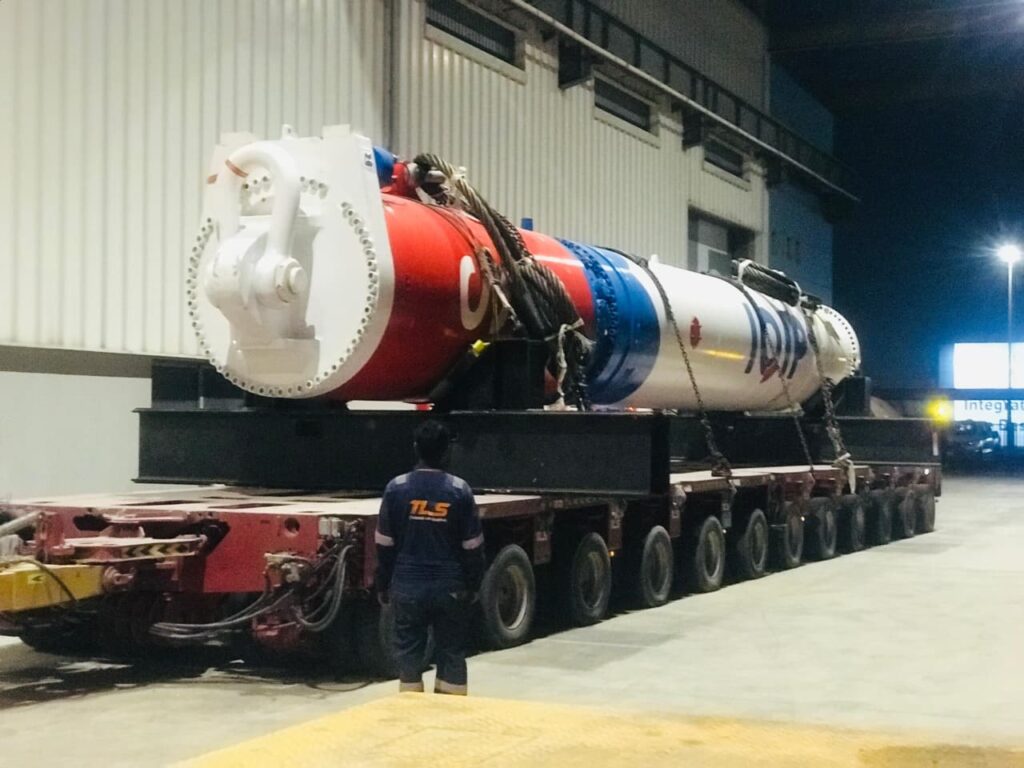
The S1400 Hydro Hammer is a paramount piece of equipment for both offshore and onshore heavy construction, specifically engineered for deep-water drilling and massive pile-driving operations. Because it is incredibly dense, an isolated 160-ton payload poses a severe threat to subterranean public utilities and asphalt surfaces if the weight is not perfectly distributed. Additionally, a structural width of 4.63 meters drastically eclipses standard highway lanes, transforming a 60-kilometer transit into a highly complex Over-Dimensional Cargo (ODC) mission.
| Cargo Classification | Industry Application | Total Gross Weight | Maximum Width |
| S1400 Hydro Hammer | Offshore & Heavy Construction | 160 Metric Tons | 4,630 mm (4.63 m) |
Exact Asset Dimensions:
- Total Length: 16,000 mm (16.0 meters)
- Total Width: 4,630 mm (4.63 meters)
- Running Height: 3,000 mm (3.0 meters)
- Transit Distance: 60.00 Kilometers
What heavy-lift trailer safely carried the 160-ton machinery?
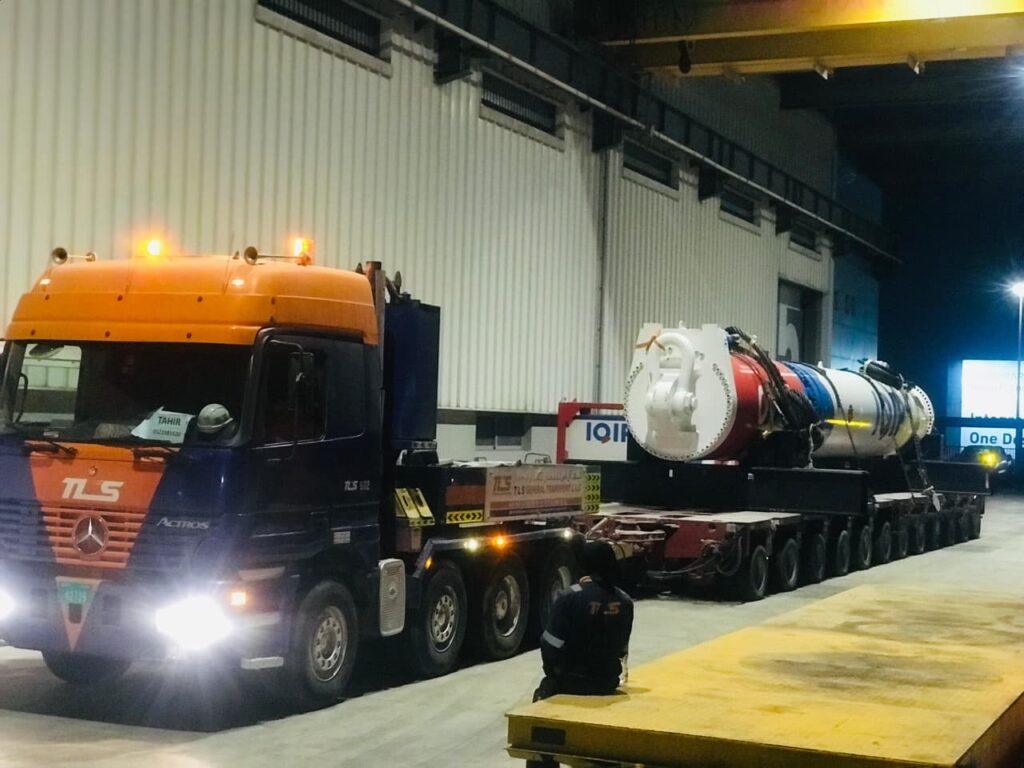
Conventional low-bed trailers are structurally incapable of bearing a 160-ton concentrated load. To guarantee absolute safety and road compliance, TLS deployed a specialized 12-Axle Line Goldhofer THP/SL Trailer.
This modular hydraulic transport system is built explicitly for extreme payloads. The 12-axle configuration allowed our engineers to stretch the 160,000-kilogram mass across a massive footprint, ensuring strict adherence to UAE federal axle-weight regulations.
Core operational solutions provided by TLS:
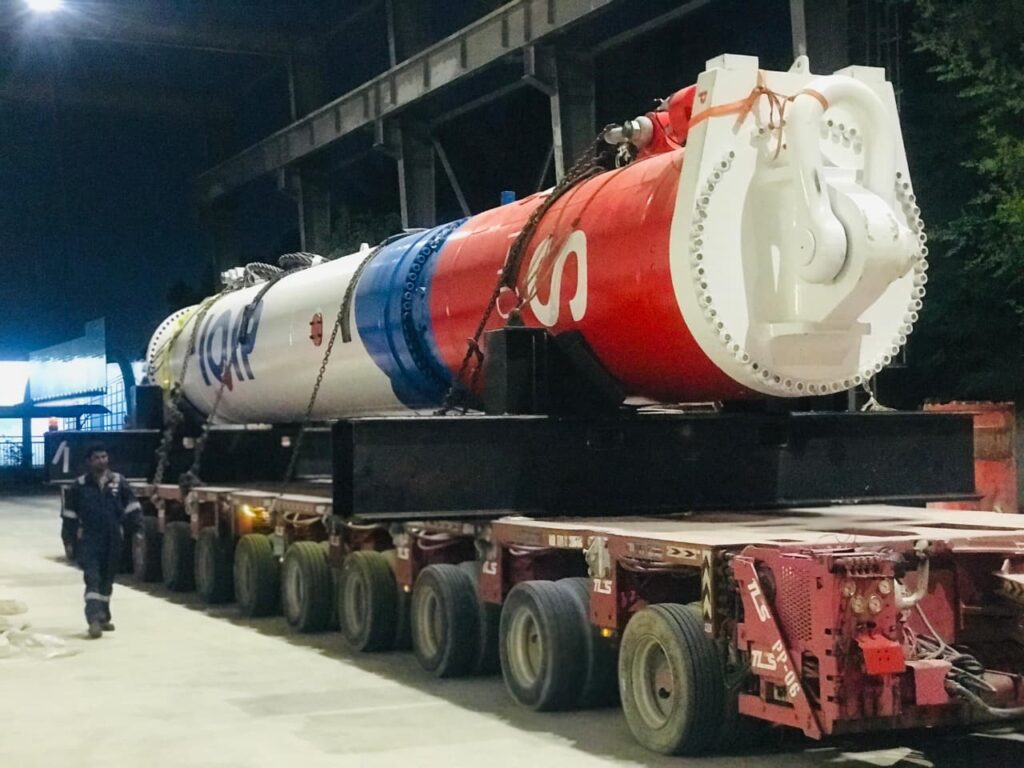
- Engineered Cargo Lashing: Given the extreme density of the hammer, the TLS technical team devised advanced lashing matrices to keep the high-value asset entirely static, especially when navigating uneven terrain.
- E11 Highway Interventions: A 160-ton load cannot legally or safely cross standard highway overpasses. TLS orchestrated strategic ground-level road openings along Sheikh Zayed Road (E11), completely bypassing structurally vulnerable bridges.
- Hydraulic Route Navigation: The 60-kilometer path from DIP 2 to the port featured steep gradients and tight industrial corridors. Operators utilized the Goldhofer’s active hydraulic suspension to continuously level the deck, safeguarding the cargo’s center of gravity.
Why are Hydro Hammers frequently relocated within the GCC?
The Gulf region is currently driving a massive expansion in mega-construction and offshore energy infrastructure. Heavy-duty impact hammers are mandatory for driving the foundational steel piles that support artificial islands, deep-sea oil rigs, and expansive port terminals. Because operational downtime is financially crippling in the energy sector, the rapid, secure transit of these assets from staging yards like DIP 2 to global export hubs like Jebel Ali Port is a constant, high-stakes logistical requirement.
Overcoming Severe Infrastructure Bottlenecks
The successful execution of this mega-move hinged on the seamless collaboration between TLS route engineers, specialized transport operators, and UAE traffic authorities.
| Logistical Challenge | Project Constraint | TLS Execution Strategy |
| Bridge Structural Limits | 160 MT exceeds overpass capacities | Executed strategic ground-level road openings across E11. |
| Cargo Density | 160-Ton concentrated mass | Utilized a 12-axle Goldhofer THP/SL to perfectly disperse the load. |
| Route Geometry | Steep inclines & narrow industrial roads | Leveraged active hydraulic deck leveling to prevent tipping. |
| Regulatory Compliance | Strict UAE ODC traffic mandates | Secured full RTA permitting and dedicated police convoy escorts. |
This flawless operation highlights TLS’s unwavering dedication to heavy-lift innovation and precision. By expertly managing severe infrastructure limits and complex regulatory frameworks, TLS guarantees that the Middle East’s most vital industrial components arrive exactly when required.
Frequently Asked Questions on Heavy Construction Logistics
Q: What exactly does an S1400 Hydro Hammer do?
A Hydro Hammer is a colossal hydraulic impact device.
In heavy construction and offshore energy, it functions like a massive, automated sledgehammer, driving giant steel tubes (piles) deep into the earth or seabed to create immovable foundations for bridges, oil platforms, and port docks.
Q: Why is a 12-axle Goldhofer THP/SL required for a 160-ton load?
When transporting 160 tons, the primary danger is crushing the road surface or collapsing buried water mains and power lines. A 12-axle modular trailer is equipped with up to 96 individual tires. This massive array of wheels safely dissipates the extreme weight over a huge surface area, while its independent hydraulic steering allows the massive rig to pivot around tight urban corners.
Q: Why do logistics companies execute “road openings” on Sheikh Zayed Road (E11)?
Standard highway bridges are engineered with strict structural weight tolerances. A 160-ton cargo block, combined with the immense weight of the truck and the 12-axle trailer itself, will easily exceed the safe structural yield of a standard overpass. To cross a major artery like the E11 safely, TLS coordinates with traffic authorities to temporarily halt civilian vehicles, open the central median barriers, and drive the convoy directly across the highway at ground level, completely avoiding the bridge structure.