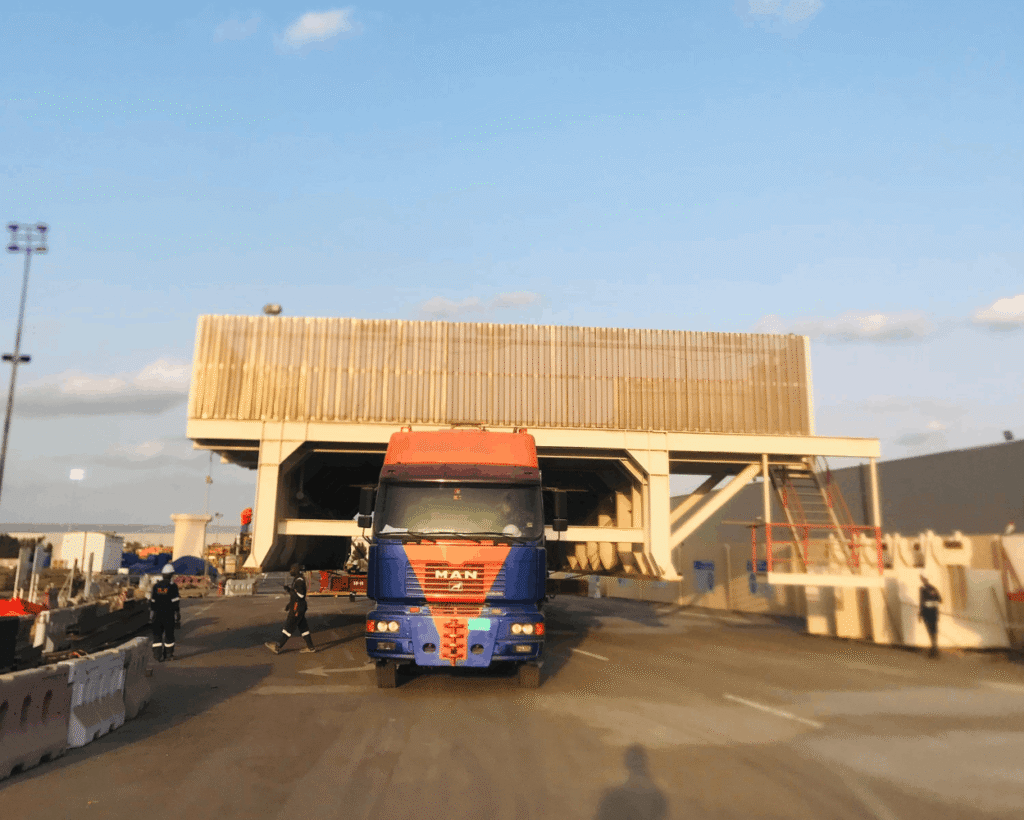
This case study highlights the highly specialized logistics capabilities of TLS in transporting a massive 150 Metric Ton Cantilever Extend Deck. As an indispensable component for offshore Jackup Barge operations, this Over-Dimensional Cargo (ODC) presented extreme physical dimensions spanning 14.9 meters wide and 5.15 meters high. Successfully safely navigating these severe road constraints required the advanced engineering and hydraulic modular equipment that TLS is known for.
Why does a 150-ton Jackup Barge deck require specialized transport expertise?
A Cantilever Extend Deck is a vital structure for offshore exploration and construction. It provides the necessary extended reach for drilling and maintenance operations in shallow-water environments. Relocating this massive ODC involves mitigating severe risks associated with its extreme mass and wide footprint, ensuring total stability and route clearance to protect the high-value offshore asset.
| Asset Classification | Energy Sector Application | Total Gross Weight | Maximum Width |
| Cantilever Extend Deck | Offshore Drilling & Maintenance | 150 Metric Tons | 14,900 mm (14.9 m) |
Exact Asset Specifications:
- Overall Length: 28,500 mm (28.5 meters)
- Overall Width: 14,900 mm (14.9 meters)
- Overall Height: 5,150 mm (5.15 meters)
What specialized equipment safely managed the 150 MT offshore structure?
Given the staggering weight and sprawling width of the deck, conventional transport trailers were entirely inadequate. The margin for error regarding load distribution and stability was virtually zero, as any imbalance could induce structural stress or catastrophic failure during transit.
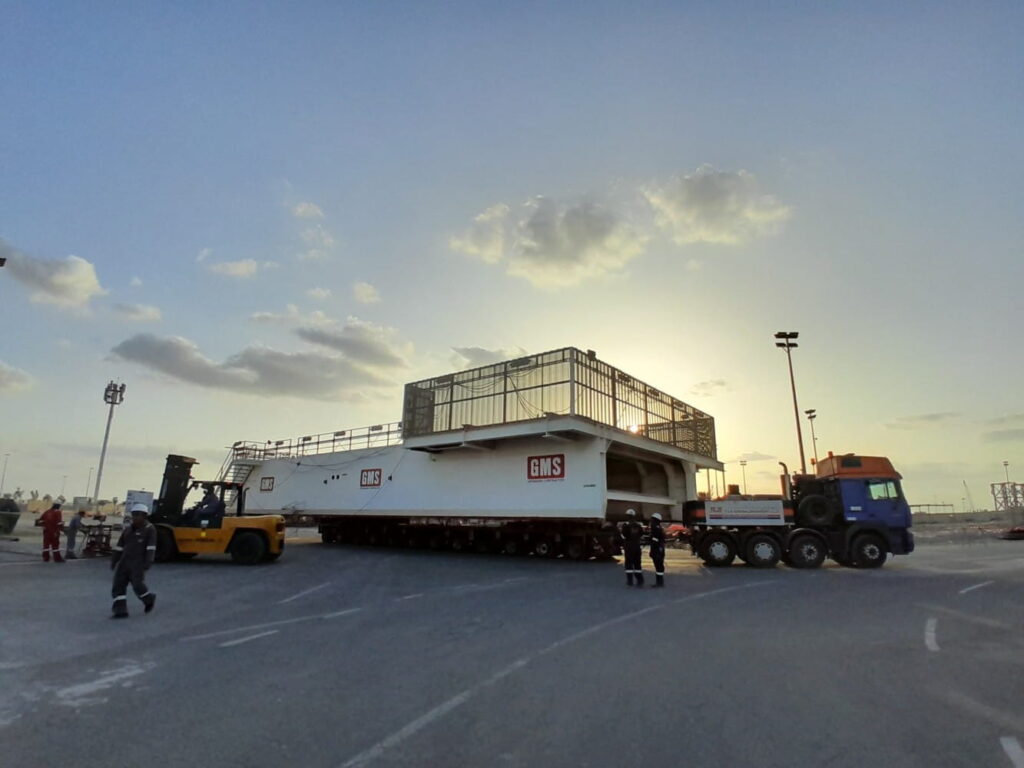
TLS deployed heavy-duty Hydraulic Modular Trailers specifically engineered to support the 150 MT load. This equipment provided the exceptional maneuverability and load dispersion required to prevent structural strain and overcome the severe road limitations imposed by the 14.9-meter width.
Key operational solutions provided by TLS:
- Engineered Weight Distribution: The TLS technical team executed advanced calculations to guarantee the 150-ton mass was uniformly distributed across the modular axles, safeguarding both the cargo and the public road network.
- Precision Route Engineering: The transport path was rigorously surveyed and planned to account for every physical bottleneck. TLS confirmed the feasibility of the transit by mapping out customized solutions for the strict clearance limits dictated by the 14.9-meter cargo width.
How often are Jackup Barge components transported in the GCC?
As a premier global epicenter for offshore oil, gas, and maritime operations, the GCC experiences a constant logistical demand for moving Jackup Barge components. The dynamic energy sector drives these heavy-lift relocations frequently often every few months. These movements are critical to supporting ongoing maintenance, launching new drilling campaigns, and facilitating large-scale offshore construction.
GCC Jackup Barge Movement Drivers:
- Oil & Gas Exploration Initiatives: Major oilfields across the UAE, Saudi Arabia, Qatar, and Kuwait demand the continuous repositioning of Jackup barges to support active drilling and well intervention projects.
- Offshore Infrastructure Construction: Jackup barges are heavily utilized in the creation of artificial islands, offshore terminals, and massive port expansions throughout the region.
- Routine Maintenance Cycles: Annual or biennial maintenance schedules require the relocation of platforms and barges back to dry docks or specialized offshore refurbishment facilities.
What critical logistical challenges were successfully resolved?
In project logistics, success is defined by the seamless synergy of engineering, specialized transport, and flawless execution. For this mega-move, it meant ensuring the critical offshore asset was delivered securely and with zero incidents.
| Performance Metric | Project Complexity | How TLS Delivered |
| Cargo Mass | 150 MT Heavy-Lift Load | Executed with zero structural stress or asset damage recorded. |
| Clearance Hazards | 14.9m Wide x 5.15m High | Flawlessly navigated utilizing hydraulic modular steering. |
| Offshore Continuity | Vital Jackup Barge component | Delivered seamlessly to ensure uninterrupted offshore readiness. |
| Operational Risk | High instability and road constraint potential | Mitigated all traffic and route risks through comprehensive pre-planning. |
The flawless execution of this Over-Dimensional Cargo transport, especially navigating the complex regulatory and engineering hurdles inherent to high-traffic regions is driven by the extensive expertise of TLS. Leveraging more than two decades of specialized experience in heavy-lift and project logistics, TLS ensures that the most technically demanding, high-value shipments are executed with deep regulatory insight and proven operational excellence.
Frequently Asked Questions on Offshore ODC Logistics
Q: What is a Cantilever Extend Deck and why is it crucial for Jackup Barges?
It is a massive, extendable framework mounted on a Jackup Barge that permits the drilling apparatus to be positioned outward over an existing, fixed offshore platform. This extended operational reach is absolutely vital for conducting efficient well intervention, maintenance, and drilling within the offshore oil and gas industry.
Q: Why does a 14.9-meter cargo width require such rigorous route planning?
Spanning nearly 15 meters, the cargo drastically exceeds the width of multiple standard highway lanes combined. Moving it requires a highly technical route survey to orchestrate the temporary removal of street furniture, power lines, and traffic signals. Every single kilometer becomes a calculated engineering operation to guarantee safe clearance.
Q: How are the actual Jackup Barges relocated within the GCC?
For localized, short-distance moves, Jackup Barges are typically towed by heavy-duty tugboats or moved using their own propulsion systems. However, for long-haul international transits across the UAE, Saudi Arabia, or Qatar, specialized semi-submersible heavy-lift vessels are frequently utilized to ensure maximum safety and efficiency over open waters.